Stop Trusting the Label: What to Actually Look for When You Buy Food
Let's be honest about something: food labels are designed to sell product, not to inform consumers. That's not cynicism — it's just marketing. The word "natural" has no legal definition under FDA regulations. "Cage-free" eggs can still come from hens crowded into massive indoor warehouses. And "sustainably sourced" can mean almost anything a brand decides it means on a given Tuesday.
None of this means ethical, healthy food doesn't exist. It absolutely does. But finding it requires going a layer deeper than the front of the package — and asking a different set of questions entirely.
This isn't about perfection or spending more money than you have. It's about building a sharper lens so that when you do have the ability to choose, you're choosing with real information instead of feel-good language.
Why "Organic" Is a Starting Point, Not a Finish Line
USDA Certified Organic is a meaningful standard. It prohibits synthetic pesticides, genetically modified organisms, and certain artificial additives. For a lot of shoppers, it's the most accessible way to reduce their exposure to agricultural chemicals, and that matters.
But the organic label says very little about soil health, carbon sequestration, water usage, worker treatment, or animal welfare beyond basic requirements. A massive industrial farm growing organic monocrops — the same crop, thousands of acres, year after year — can carry the USDA seal while still depleting the land, drawing down aquifers, and paying farmworkers poverty wages.
Organic is a floor. The conversation starts there.
Question 1: What's Happening to the Soil?
Soil is the foundation of the entire food system, and it's in serious trouble. The USDA estimates that the US loses roughly 1.7 billion tons of topsoil to erosion each year. Degraded soil grows less nutritious food, absorbs less water, and releases carbon into the atmosphere rather than locking it in.
So when you're evaluating a food brand or a farm, the question worth asking is: are they building soil or depleting it?
Practices like cover cropping, crop rotation, composting, and minimal tillage actively restore soil biology over time. Certifications like Regenerative Organic Certified (ROC) and Land to Market go further than USDA Organic specifically because they evaluate soil health outcomes, not just what inputs are avoided.
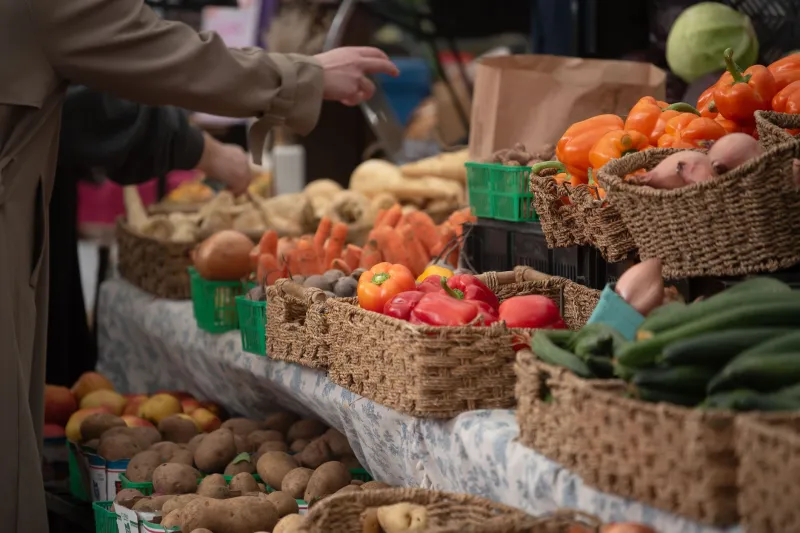
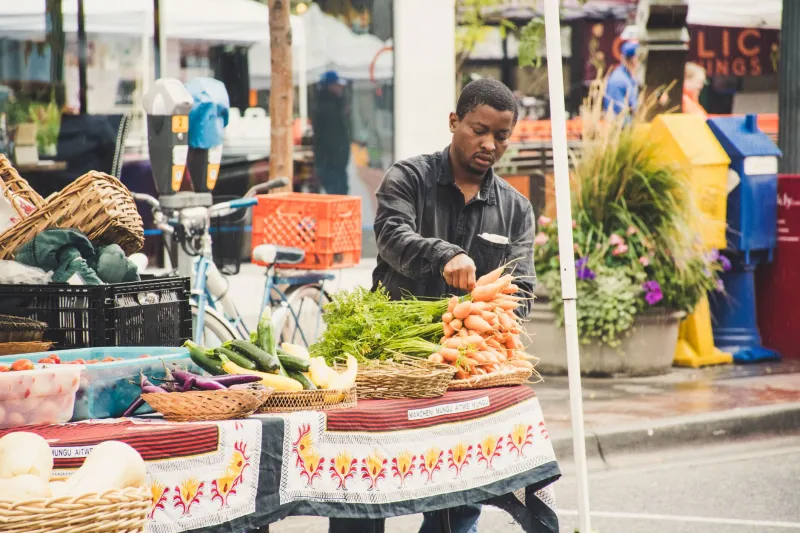
At farmers markets, you can just ask. Most small-scale farmers who are doing the right thing by their land are genuinely excited to talk about it.
Question 2: Where Is the Water Coming From — and Where Is It Going?
Agriculture accounts for roughly 80% of all water consumption in the United States, according to the USDA. In drought-stressed regions like California and the Southwest — which together produce a significant portion of the nation's fruits, vegetables, and nuts — water sourcing is one of the most pressing ethical questions in food production.
Almonds, avocados, and pistachios, for example, are often held up as health foods, but they're also extraordinarily water-intensive crops grown in some of the driest parts of the country. That doesn't mean you should never eat them, but it's worth understanding the tradeoff.
Look for brands that publish water usage data or that source from regions where rainfall patterns make irrigation less extractive. Certified B Corporations are required to disclose environmental impact data, which is a useful starting point.
Question 3: Who Actually Harvested This?
Fair labor is the part of the ethical food conversation that gets skipped most often, probably because it's the hardest to see from a grocery store aisle. But the people who pick, pack, and process American food are among the most economically vulnerable workers in the country, frequently excluded from basic labor protections and often working in conditions that would be unacceptable in any other industry.
Fair Trade USA certification is the most widely recognized standard for ensuring farmworkers receive fair wages and safe working conditions. It's most commonly found on coffee, chocolate, bananas, and tea. The Agricultural Justice Project's Food Justice Certified label goes even further, covering domestic farm and food workers.
If you're buying from a local farm directly, ask about their labor practices. It's a reasonable question, and how a farmer responds to it is often as telling as the answer itself.
Question 4: How Was the Animal Actually Raised?
Animal welfare certifications exist on a spectrum, and navigating them requires a little homework. Here's a quick orientation:
- Certified Humane and Animal Welfare Approved (now part of A Greener World) are among the most rigorous third-party standards for livestock treatment in the US, covering living conditions, access to the outdoors, and handling practices.
- Grass-Fed from the American Grassfed Association means cattle were pasture-raised and never fed grain — a meaningful distinction from USDA's looser grass-fed claim, which doesn't prohibit feedlot finishing.
- Cage-Free and Free-Range for poultry are largely meaningless without additional context. Neither requires meaningful outdoor access.
For most people, buying less meat and choosing better when you do buy it is a more realistic and impactful approach than hunting down the perfect certification on every purchase.
Question 5: How Far Did This Food Travel — and Does That Actually Matter?
Food miles — the distance food travels from farm to consumer — get a lot of attention in sustainability conversations, but the picture is more complicated than it first appears. A locally grown tomato that was raised in a heated greenhouse might actually have a higher carbon footprint than one shipped from a sun-drenched farm in Mexico.
That said, buying local and regional food does tend to support smaller farms, shorter supply chains, fresher product, and more direct relationships between eaters and growers. The USDA's Local Food Directories tool can help you find farmers markets, co-ops, and community-supported agriculture (CSA) programs near you.
The most useful framing isn't "local versus global" — it's "do I know something meaningful about how this was grown?" Local buying makes that knowledge more accessible. It's not the only way to get there, but it's often the most direct.
Putting It Together Without Losing Your Mind
Here's the thing about ethical food shopping: you will never get it perfectly right, and that's okay. The goal isn't a spotless consumer record. It's a gradual shift in attention — learning to ask better questions, supporting producers who are doing the work, and pushing back (with your wallet and your voice) against the brands that are coasting on marketing language.
Start with one question from this list. Apply it to one category of food you buy regularly. Build from there. The food system is enormous and imperfect, but it does respond to what people choose to buy — and more importantly, to what people refuse to accept.