Yes, You Can Eat Clean on a Tight Budget — Here's Exactly How
Let's Kill the 'Organic Is Only for Rich People' Myth
We hear it all the time, and honestly? We get it. You walk into Whole Foods, price a bag of organic spinach against the conventional version, and the sticker shock is real. It's easy to conclude that clean eating is a luxury reserved for people with a certain kind of grocery budget.
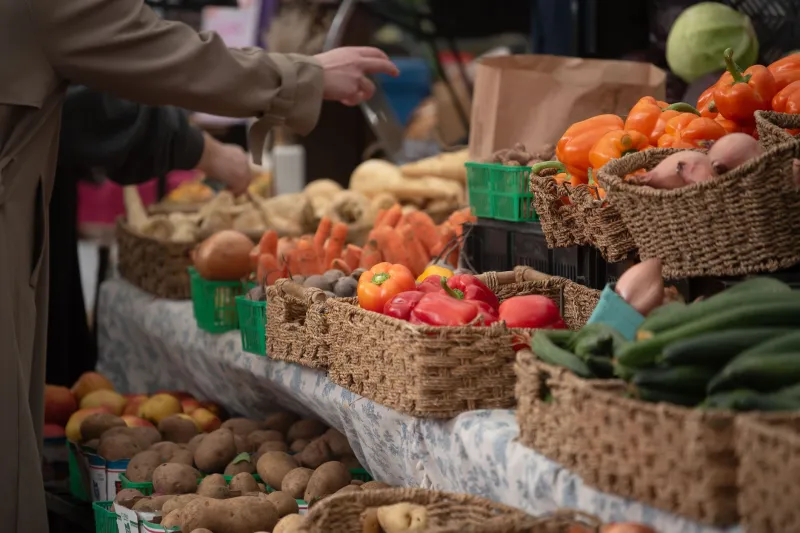
But that framing leaves out a lot. It ignores the farmers markets where organic produce can actually be cheaper than the supermarket. It skips over the math on buying in bulk, cooking from scratch, and reducing food waste. And it completely overlooks the long-game economics of eating food that keeps you healthier.
We're not here to lecture anyone on what they can or can't afford — that's not our style. What we are here to do is hand you seven genuinely useful, road-tested strategies for eating more organically and sustainably without turning your budget into a casualty.
1. Master the Dirty Dozen (and the Clean Fifteen)
This is the single highest-leverage move for most households, and it's free to implement right now.
Every year, the Environmental Working Group (EWG) releases its Dirty Dozen — a list of the twelve conventionally grown fruits and vegetables with the highest pesticide residue loads. The 2024 list includes strawberries, spinach, kale, peaches, pears, and bell peppers, among others. These are the items where buying organic genuinely matters most from a health standpoint.
On the flip side, the Clean Fifteen — avocados, sweet corn, pineapples, onions, and others — have such minimal pesticide residue when grown conventionally that the organic premium is largely optional.
The practical move: Go organic on the Dirty Dozen, go conventional on the Clean Fifteen, and redirect the savings. A family of four can realistically save $20–40 per month with this approach alone.
Download the EWG's free app or print the list and tape it inside a kitchen cabinet. Done.
2. Buy Direct From Farmers — Seriously
Farmers markets have a reputation for being pricey, and some are. But here's what most people don't realize: when you buy directly from a farmer, you're cutting out the distributor, the wholesaler, the regional warehouse, and the retailer markup. The farmer gets more, you pay less. That's how supply chains work.
Many small and mid-scale farms that use organic or regenerative practices aren't certified — because USDA Organic certification costs thousands of dollars a year, which is prohibitive for a 20-acre family operation. But their practices are often cleaner than certified farms. Ask the farmer directly. Most will happily tell you exactly what they spray (if anything) and how they manage their soil.
Pro tips for farmers market savings:
- Show up in the last 30–45 minutes — vendors often discount perishables rather than haul them home
- Buy in bulk when something's in season and abundant — a flat of tomatoes for $15 beats paying $4/lb all winter
- Build a relationship — regular customers sometimes get informal deals
3. Join a CSA and Eat What's Actually in Season
Community Supported Agriculture (CSA) programs let you pay a farm upfront — usually at the start of the growing season — in exchange for a weekly box of produce. The farm gets cash flow when they need it most; you get fresh, local, often organic vegetables at prices that routinely beat grocery stores.
A typical CSA share runs $20–35 per week for enough vegetables to cover a significant portion of a household's produce needs. Compare that to building a similar cart at a natural grocery store and you're often looking at 30–50% savings.
The catch? You eat what's ready, not what you're craving. This is also the feature, not the bug — eating seasonally is one of the most sustainable food choices you can make, and it forces a creativity in the kitchen that most people end up genuinely loving.
Find CSAs near you at LocalHarvest.org.
4. Rethink Protein — Plants Are Your Friends
Meat is where sustainable eating gets expensive fast. Pasture-raised chicken, grass-fed beef, and wild-caught salmon are genuinely worth the investment when you can swing it — but they don't have to anchor every meal.
Organic dried beans, lentils, and legumes are among the most nutrient-dense foods on the planet, and they cost almost nothing. A pound of organic black beans runs about $2.50–3.00 and feeds a family of four as a meal component. Organic brown lentils? Around the same.
A practical framework: aim for 2–3 plant-forward dinners per week, one or two meals with sustainably sourced fish (canned wild salmon and sardines are budget heroes), and reserve higher-quality meat for the meals where it really shines. Your grocery bill — and your gut microbiome — will thank you.
5. Frozen and Canned Organic: The Underrated Workhorses
Fresh isn't always best, nutritionally speaking. Frozen organic vegetables are picked at peak ripeness and flash-frozen, which locks in nutrients that fresh produce loses during days of transport and shelf time. A bag of organic frozen spinach from Cascadian Farm or Woodstock Foods runs $3–4 and is nutritionally comparable (often superior) to fresh.
Same goes for canned organic tomatoes, beans, and pumpkin. Stock your pantry with these and you have the backbone of dozens of healthy, affordable meals on standby.
Cost comparison: A 15-oz can of organic chickpeas — roughly $1.49 at most stores — versus a 6-oz serving of conventional rotisserie chicken at $4–5. The chickpeas win on price, fiber, and environmental footprint every single time.
6. Reduce Food Waste Like It's Your Part-Time Job
The average American household throws away nearly $1,500 worth of food per year. That's not a small number. And when you're buying higher-quality organic produce, waste is even more expensive.
Some habits that genuinely move the needle:
- Meal plan before you shop — even a loose plan cuts impulse buys and forgotten produce
- First in, first out — move older produce to the front of the fridge, newer stuff to the back
- Embrace the 'clean out the fridge' dinner once a week — grain bowls, stir-fries, and frittatas are perfect vehicles for odds and ends
- Freeze before it goes bad — overripe bananas, wilting herbs, leftover cooked grains, broth from vegetable scraps
Cutting food waste by even 25% can effectively subsidize your entire organic budget upgrade.
7. Buy Bulk, Cook From Scratch, and Skip the Convenience Tax
Organic snack bars, pre-washed salad kits, single-serve smoothie packs — these are convenience products, and you're paying a significant premium for the packaging and prep work. The closer you buy to the raw ingredient, the cheaper and cleaner your food gets.
Bulk bins at co-ops and natural grocery stores (Sprouts, Natural Grocers, and many regional co-ops carry them) let you buy exactly what you need of organic oats, nuts, seeds, flour, and grains — often at 20–40% less than packaged equivalents.
A batch of homemade organic granola costs about $4–6 and yields 8–10 servings. The same volume of a name-brand organic granola? Closer to $12–16. The math is pretty clear.
The Bigger Picture
Eating clean on a budget isn't about perfection — it's about direction. You don't have to overhaul everything at once. Start with the Dirty Dozen swap, find one local farmer to buy from, and try one plant-forward dinner a week. Build from there.
The goal at Good Natured Food has always been to make this kind of eating accessible, not aspirational. Real food, grown with care, shared with the people you love — that's not a luxury. That's just a good life. And with a little strategy, it's one that fits in most budgets, too.