Something Gross Is Growing in Your Coffee Beans — And No One's Talking About It
You've probably spent real time thinking about your morning coffee. Maybe you buy single-origin beans. Maybe you grind fresh. Maybe you've gone down the rabbit hole of water temperature and bloom time and pour-over ratios. Good for you — genuinely.
But here's a question most coffee lovers haven't thought to ask: is there mold in your cup?
Not visible mold. Not the fuzzy stuff you'd notice and throw out. We're talking about mycotoxins — invisible, odorless toxic compounds that molds produce as byproducts, and that can survive the roasting process well enough to end up in your brewed coffee. It's one of the more uncomfortable blind spots in the clean-eating conversation, and it's worth understanding.
What Are Mycotoxins, Exactly?
Mycotoxins are chemical compounds produced by certain species of mold — particularly Aspergillus and Fusarium — as they grow on crops. They're not the mold itself, they're what the mold leaves behind. And unlike the mold, they don't always get destroyed by heat.
In coffee, the two most commonly cited mycotoxins are ochratoxin A and aflatoxin B1. Ochratoxin A has been linked to kidney damage in animal studies and is classified as a possible human carcinogen by the World Health Organization. Aflatoxin B1 is even more concerning — it's one of the most potent naturally occurring carcinogens known, and it's regulated by the FDA in many food products, though enforcement in coffee is inconsistent.
The European Union has some of the strictest limits on ochratoxin A in roasted coffee. The US? Considerably more relaxed. So while European consumers have regulatory guardrails, Americans are largely left to navigate this on their own.
How Does Mold Get Into Coffee in the First Place?
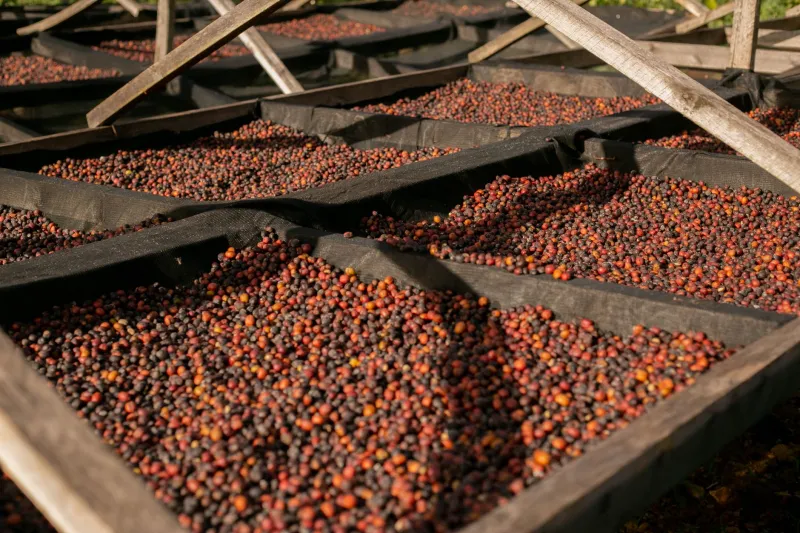
Coffee is a tropical crop. It grows in hot, humid environments — exactly the conditions mold loves. From the moment coffee cherries are harvested, they're vulnerable. If the drying process is rushed, inconsistent, or happens in poor conditions, mold can colonize the beans before they ever get roasted.
Wet processing (where the fruit is removed before drying) tends to produce cleaner beans. Dry processing (where the whole cherry dries around the bean for weeks) creates more opportunity for mold growth if not done carefully. Neither method is inherently bad, but quality control matters enormously — and at the lower end of the commodity coffee market, that control is often lacking.
Here's the uncomfortable truth: the cheapest coffee on the shelf is almost certainly made from lower-grade beans with less rigorous processing standards. Blended coffees and mass-market brands often source from multiple origins, mixing quality levels in ways that make contamination harder to track. Instant coffee, which is typically made from lower-quality robusta beans, may carry the highest risk.
Should You Actually Be Worried?
Let's be honest about the nuance here. A single cup of coffee — even one with detectable mycotoxin levels — isn't going to send you to the hospital. The concern is cumulative exposure. If you're drinking two or three cups a day, every day, from a source that consistently contains low-level contamination, that adds up over time.
For most healthy adults, the risk is probably modest. But for people with kidney issues, compromised immune systems, or known sensitivity to mold, it's worth taking more seriously. And for anyone who's committed to reducing their overall toxic load — which is kind of the whole point of eating clean — it's a reasonable thing to address.
Some people report feeling noticeably better — less jittery, fewer headaches, better mental clarity — after switching to low-mycotoxin coffee. There's not a ton of peer-reviewed research on this specific effect, but the anecdotal pattern is consistent enough to be interesting.
What to Look for When You're Shopping
This is where it gets practical. Not every brand tests for mycotoxins, and not every brand that claims to be "clean" actually is. Here's how to cut through the noise:
Look for third-party tested brands. Some coffee companies — particularly in the specialty and functional wellness space — explicitly test their beans for mycotoxins and publish or provide those results. Bulletproof Coffee popularized this conversation, though they're not the only option. Brands like Purity Coffee, Peak Performance, and Natural Force have all built their marketing around low-toxin, tested coffee. Do your own research on any brand's testing claims before taking them at face value.
Prioritize single-origin, specialty-grade beans. Specialty coffee (scored 80+ on the Specialty Coffee Association scale) has to meet higher quality standards, which generally means better processing and less opportunity for mold contamination. Single-origin beans are also more traceable, so there's more accountability in the supply chain.
Choose wet-processed (washed) coffees when possible. Because the fruit is removed early, there's less surface area for mold to colonize during drying. Washed Ethiopian, Colombian, and Central American coffees are good places to start.
Be skeptical of blends and bargain bins. This isn't a rule without exceptions, but low-cost commodity coffee is where quality control tends to slip. If you're buying the cheapest bag on the shelf, you're probably getting the beans that didn't make the cut elsewhere.
Store your coffee properly. Once you've got good beans, don't let them go bad on your counter. Keep them in an airtight container, away from heat and humidity. Don't store them in the freezer if you're opening the bag regularly — condensation is your enemy.
Does Organic Matter Here?
Organic certification is valuable for pesticide reduction (we've covered that elsewhere on this site), but it doesn't specifically address mycotoxins. An organic coffee can still have mold contamination if the processing isn't done well. That said, organic farms tend to use better agricultural practices overall, and there's often a correlation between organic certification and higher-quality processing standards — just don't assume it's a guarantee.
The most protective combination is organic plus mycotoxin-tested, or organic plus specialty-grade with a reputable roaster who's transparent about sourcing.
The Bottom Line
Your morning coffee ritual deserves the same scrutiny you give the rest of your food. You're already reading labels, choosing organic produce, and thinking about where your food comes from — this is just one more layer of that same instinct.
You don't have to become a paranoid coffee scientist. But knowing that mycotoxins exist, that they're more common in low-quality coffee, and that there are real options for cleaner beans? That's just being an informed consumer.
Your cup should be one of the good parts of your day — not something quietly working against you. Find a roaster who takes quality seriously, check whether they test for mold toxins, and drink your coffee with a little more peace of mind.
That's what clean eating actually looks like — all the way down to the first sip of the morning.