Sea Salt Isn't as Pure as You Think — And Your Ocean Has a Plastic Problem
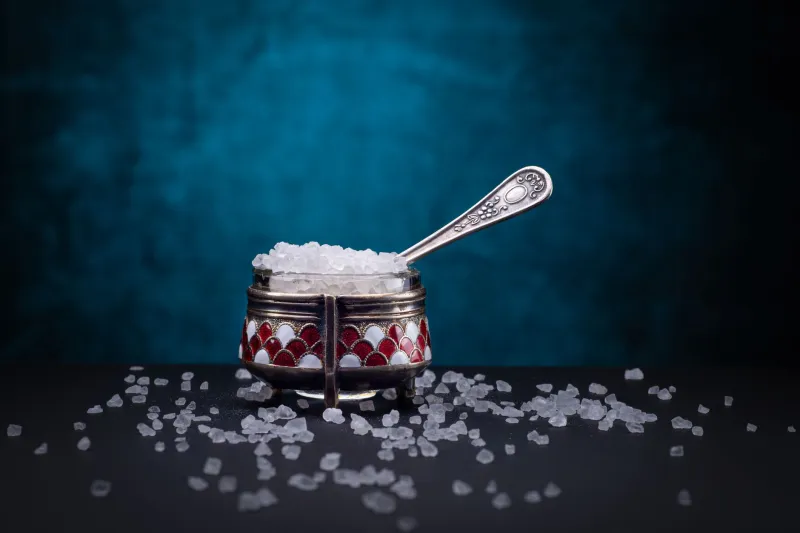
There's something almost poetic about reaching for a pinch of sea salt. It feels ancient. Elemental. Like you're pulling flavor straight from the ocean and into your food without anything getting in the way. That's the whole point of the marketing, honestly — words like hand-harvested, pure, and mineral-rich are doing a lot of heavy lifting on those little glass jars.
But here's the part that doesn't make it onto the label: the ocean those salt crystals came from is, by any honest measure, a plastic soup. Microplastics — tiny fragments less than 5 millimeters wide, many invisible to the naked eye — have saturated every major body of water on Earth. The Pacific. The Atlantic. The Mediterranean. Remote stretches of the Arctic. There is no pristine ocean left to harvest from.
And that contamination? It's ending up in your salt shaker.
What the Research Actually Found
This isn't a fringe concern. A 2018 study published in Environmental Science & Technology tested 39 sea salt brands from 21 countries and found microplastics in 36 of them. A separate analysis from researchers in South Korea identified up to 1,674 microplastic particles per kilogram of sea salt in some samples — with Asian sea salts, particularly those harvested from heavily industrialized coastlines, registering the highest concentrations.
US-sourced sea salts fared somewhat better in comparative studies, but "better" is a relative term when we're still talking about plastic particles in food you're putting on your dinner every night.
The types of plastics turning up aren't random, either. Researchers have identified polyethylene terephthalate (PET, the stuff in water bottles), polypropylene, and polystyrene — all common single-use plastics that break down in the ocean over time into smaller and smaller fragments without ever fully disappearing.
The 'Natural' Label Doesn't Cover This
Here's where it gets frustrating for anyone trying to eat thoughtfully. There is currently no FDA standard requiring sea salt producers to test for microplastic contamination. None. The label can say "pure," "natural," "unrefined," or "mineral-rich" without any independent verification that the product is free from plastic particles. Those terms are essentially unregulated in this context.
Organic certification doesn't help you here, either. The USDA organic program addresses pesticide use and agricultural practices — it has no framework for evaluating microplastic contamination in sea-harvested minerals. A sea salt can be certified organic and still contain measurable levels of plastic.
That's a meaningful gap between what clean-eating marketing promises and what science is actually finding.
Which Brands Are Actually Testing?
A small but growing number of companies have started voluntarily testing their products and publishing results — and that transparency is worth rewarding with your grocery dollars.
Redmond Real Salt sources its salt from an ancient seabed deposit in Utah, which means it was laid down long before industrial plastic production began. It's not sea salt in the traditional sense, but it's one of the most credible options for avoiding ocean-sourced contamination. The company is also transparent about its mineral testing.
Celtic Sea Salt and Fleur de Sel products from France's Brittany coast have been studied in independent research with relatively lower contamination levels compared to salts from more polluted coastlines, though they're not zero.
SaltWorks, a Washington State-based company, has publicly acknowledged the microplastics issue and begun internal testing, though comprehensive third-party results aren't fully published as of this writing.
The honest answer is that most sea salt brands aren't testing — or aren't sharing results if they are. When a company doesn't publish data, it's reasonable to assume that's a choice, not an oversight.
The Deeper Problem: We Can't Filter Our Way Out of This
Some filtration methods used in salt processing — particularly those involving evaporation and mechanical refinement — do reduce microplastic load. Ironically, more processed salts sometimes come out cleaner than "minimally processed" options, which cuts against the whole narrative around unrefined being better.
But no current commercial processing technique eliminates microplastics entirely. The contamination is too pervasive, the particles too varied in size and density. Until ocean pollution itself is addressed at scale, this is a problem that can only be managed, not solved, at the product level.
That's a hard truth for the clean eating world to sit with. We can optimize our choices, but we can't shop our way out of a systemic environmental failure.
What You Can Actually Do Right Now
None of this means you need to panic or throw out your salt. The quantities involved — even at the higher end of contamination estimates — are small compared to other microplastic exposures (canned food liners, plastic food containers, synthetic clothing, tap water). But if you're already thinking carefully about what goes into your body, this is worth factoring in.
Here's a practical framework:
Switch to mined rock salt or ancient sea salt deposits. Products like Redmond Real Salt or pink Himalayan salt (sourced from the Khewra mine in Pakistan, a deposit that predates plastic by millions of years) sidestep ocean contamination entirely. Check that your Himalayan salt is actually sourced from Pakistan and not a marketing copy — the real thing is consistently available at Costco, Trader Joe's, and most natural grocery stores.
Prioritize brands that publish third-party testing. If a company is genuinely committed to purity, they'll show their work. Look for certificates of analysis on their website or contact the company directly and ask. A brand that gets defensive about this question is telling you something.
Reduce overall salt packaging contact. Buying in bulk and storing in glass containers keeps your salt away from plastic packaging that can shed additional particles over time.
Put the issue in perspective without dismissing it. Cutting your microplastic exposure from sea salt is a reasonable, low-effort swap. It doesn't require spending more money — ancient deposit salts are often priced comparably to premium sea salts — and it's one of the cleaner wins available in an otherwise messy landscape.
The Bigger Conversation We Need to Have
The microplastics-in-sea-salt story is really just one chapter in a much longer book about how ocean pollution is migrating into our food supply. Seafood, seaweed, fish sauce, sea vegetables — anything harvested from marine environments carries some version of this risk. And as long as we're dumping roughly 8 million metric tons of plastic into the ocean every year, that risk isn't going anywhere.
Clean eating, at its best, isn't just about individual choices. It's about understanding the systems that produce our food and pushing for those systems to change. Choosing a mined salt over an ocean-harvested one is a reasonable personal workaround. But the real fix is a world where the ocean is clean enough that the question doesn't need to be asked.
Until then — check your labels, ask harder questions, and maybe reconsider what "natural" actually means when the nature it came from is this compromised.