You're Eating Plastic. A Little Every Day. Here's How to Cut Back.

Photo by Photo by Jane Korsak on Unsplash on Unsplash
Somewhere between the farm and your fork, something uninvited started showing up in the food supply. It doesn't have a flavor. It doesn't have a color. It won't appear on any ingredient list. But researchers are finding it pretty much everywhere they look — in the fish on your plate, the salt in your shaker, the water in your glass, and increasingly, inside the human body itself.
Microplastics — tiny plastic fragments smaller than 5 millimeters, often far smaller — are now one of the most pervasive contaminants in the modern food system. And unlike most food safety issues, there's no certification to look for, no label to read, and no regulatory agency that's gotten ahead of it.
How Did Plastic End Up in Our Food?
The short answer is that we've been putting plastic into the environment for decades, and it breaks down — but it doesn't disappear. It fragments into smaller and smaller pieces, eventually becoming microplastics and nanoplastics (even tinier particles that can cross cell membranes), which then enter the water cycle, the soil, and the food chain.
Ocean plastic is the most well-known source. Fish and shellfish ingest microplastic particles, and those particles accumulate in their tissue. But the contamination isn't limited to seafood. Studies have found microplastics in:
- Sea salt — both ocean-derived and some lake salts
- Tap and bottled water — bottled water, ironically, tends to contain more microplastics than filtered tap water due to plastic leaching from the bottle itself
- Fresh produce — particularly root vegetables like carrots and sweet potatoes, which absorb particles from soil
- Beer and honey
- Canned goods — where plastic-lined cans can leach particles, especially with acidic foods like tomatoes
- Tea bags — some plastic-mesh tea bags release billions of microplastic particles when steeped in hot water
And it's not just food. A 2022 study published in Environment International found microplastics in human blood samples. Other research has detected them in lung tissue and placental tissue. We are, quite literally, accumulating plastic inside us.
What Are the Health Risks?
Here's where it gets complicated — and honest. The science on health impacts is still developing, and researchers are careful not to overstate what's known. What we do know is concerning enough to take seriously.
Microplastics can carry chemical additives used in plastic manufacturing — things like phthalates and bisphenols (BPA being the most famous) — that are known endocrine disruptors. They can also act as carriers for other environmental contaminants, essentially concentrating pollutants and ferrying them into the body.
Animal studies have linked microplastic exposure to inflammation, oxidative stress, gut microbiome disruption, and hormonal interference. Human studies are harder to conduct and interpret, but a 2024 study in the New England Journal of Medicine found that people with microplastics in their arterial plaque had significantly higher rates of heart attack, stroke, and death than those without.
That's not proof of causation. But it's not nothing, either.
The Highest-Risk Foods (and What to Do About Them)
You can't eliminate microplastic exposure entirely — that ship has sailed, or rather, sunk to the bottom of the ocean. But you can meaningfully reduce your intake by making some targeted swaps.
Seafood: Shellfish like mussels, oysters, and clams are among the highest-risk foods because you eat the whole organism, digestive tract included. That doesn't mean you should avoid them — shellfish are nutritionally excellent — but sourcing matters. Look for shellfish from cleaner, colder waters (Pacific Northwest and Maine operations tend to be more regulated). Larger fish like wild salmon accumulate less plastic per serving than smaller filter feeders.
Salt: Swap ocean-derived sea salt for Himalayan pink salt or other rock salts, which come from ancient deposits formed before industrial plastic pollution existed. It's an easy, inexpensive switch.
Water: A quality home water filter makes a real difference. Reverse osmosis systems remove the highest percentage of microplastics. Even a good activated carbon filter (like a Brita with a quality cartridge) helps. Ditch single-use plastic water bottles — not just for the environment, but for your own exposure reduction.
Cooking and storage: This one's underappreciated. Heating food in plastic containers or covering hot food with plastic wrap dramatically increases plastic leaching. Switch to glass, stainless steel, or ceramic for food storage and reheating. Never microwave in plastic — including containers labeled 'microwave-safe,' which just means the container won't melt, not that it won't leach.
Tea: Switch to loose-leaf tea with a stainless steel or ceramic infuser. Paper tea bags are generally fine; the silky plastic-mesh ones are not.
Canned goods: Where possible, choose glass-jarred alternatives to canned tomatoes, tomato paste, and other acidic foods. Brands like Jovial and Bionaturae package tomatoes in glass specifically because of the leaching issue.
What About Produce?
Organic produce isn't immune to microplastic contamination — it's in the soil and water, not just in pesticides. But there are a few things worth knowing: heavily processed and packaged produce (pre-washed salad bags, for instance) has additional plastic contact time. Buying whole vegetables and washing them yourself reduces some exposure. Root vegetables absorb more soil-based particles, so peeling carrots, beets, and potatoes before eating removes some surface contamination.
Are Any Brands Taking This Seriously?
A handful of companies are starting to acknowledge the issue, even as regulators lag behind. Canned water brand Liquid Death uses aluminum cans instead of plastic. Several seafood companies are investing in cleaner sourcing and testing their products for contamination. The frozen seafood brand Vital Choice publishes third-party testing and sources from remote Alaskan waters with lower contamination levels.
But the honest answer is that no brand can fully protect you from a problem that's baked into the environment itself. The meaningful action is systemic — reducing plastic production and improving waste management at a policy level. In the meantime, the individual steps above are worth taking, both for your own health and because consumer pressure on packaging and sourcing does, over time, move markets.
Start Here
If you're feeling overwhelmed, start with the highest-impact swaps first:
- Get a water filter and stop buying single-use plastic bottles
- Stop microwaving in plastic — use glass or ceramic
- Switch your salt to a rock salt variety
- Replace plastic-mesh tea bags with loose-leaf tea
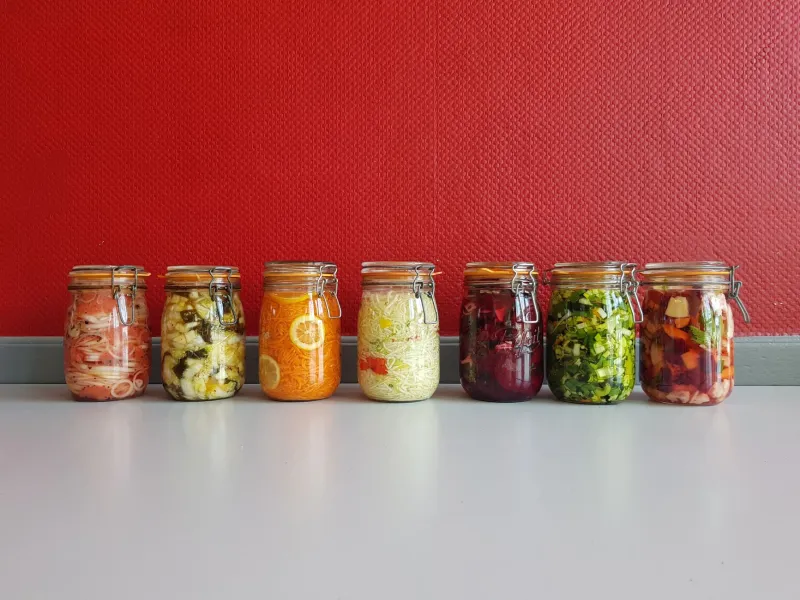
- Move your food storage to glass containers
None of these are expensive. None require a dramatic lifestyle overhaul. And collectively, they cut your daily microplastic intake more than almost anything else you could do right now.
The food system has a plastic problem. You didn't create it — but you don't have to absorb it, either.