Granola Is Basically a Cookie. Your Breakfast Deserves Better Than That.
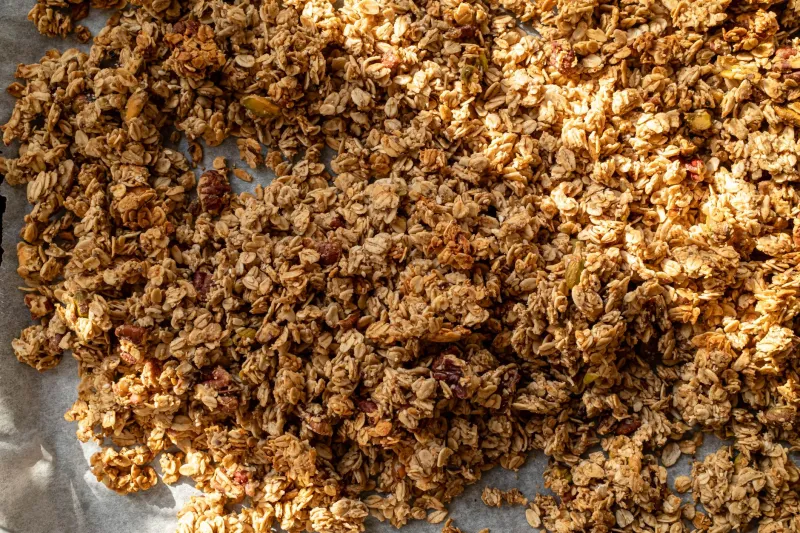
Picture the granola aisle for a second. Kraft paper bags. Hand-drawn illustrations of honey bees and sunflowers. Words like ancient grains, lightly sweetened, small batch, nourishing. The whole aesthetic says: this is what a responsible adult eats for breakfast.
Now flip that bag over and read the nutrition label. Really read it.
Chances are you're looking at 12 to 17 grams of added sugar per serving — sometimes more. That's in the neighborhood of three to four teaspoons of sugar before you've added the milk, the yogurt, or the drizzle of honey you're about to pour on top. A Krispy Kreme glazed donut has about 10 grams of added sugar. Your "clean" granola is already beating it, and breakfast hasn't even started yet.
The Serving Size Scam Nobody Talks About
Here's where granola companies really earn their money: the serving size. Federal regulations require manufacturers to list a "reference amount customarily consumed," and for granola, that's technically around 55 grams — roughly a half cup, dry. But many brands quietly list servings as small as a quarter cup, or even 45 grams, because smaller servings make every number on the label look more reasonable.
Pour yourself a normal bowl of granola. Go ahead, do it the way you actually do it in the morning, not the way you'd do it if someone were watching. You're probably looking at a cup or more. Which means you've just tripled or quadrupled those already-ambitious nutrition figures.
This isn't accidental. It's a design choice. A brand that lists 7 grams of sugar per serving sounds a whole lot better than one listing 28 grams — even if you're eating the exact same amount.
What's Actually Binding Those Clusters Together
Granola gets its signature crunch and cluster structure from fat and sugar cooked at high heat. That's not a criticism — it's just chemistry. But it does mean that what you're eating is, structurally speaking, a baked good. Oats, sweetener, oil, heat. That's a cookie. That's always been a cookie.
The sweeteners are where it gets creative. Brands marketing to health-conscious consumers have largely swapped out plain cane sugar for ingredients that read better on a label: organic brown rice syrup, coconut sugar, date syrup, raw honey, maple syrup, agave nectar. These sound dramatically better. They are not dramatically better. Your body processes fructose from agave and fructose from table sugar in essentially the same way. "Organic cane sugar" is still sugar. The pancreas does not care about the font choice.
Some of the more egregious offenders stack multiple sweeteners — say, honey and brown rice syrup and coconut sugar — which lets each one appear lower on the ingredient list while the combined sugar load stays quietly enormous. It's a well-worn trick, and it works because most of us aren't doing math at 7 a.m.
The Oil Situation Is Also Worth Your Attention
Beyond sugar, most commercial granolas are made with refined oils — canola, sunflower, safflower, or generic "vegetable oil." These are cheap, shelf-stable, and largely flavorless, which makes them useful for manufacturers. Whether they're useful for you is a different conversation. High-heat processing of these oils can degrade their fatty acid profiles, and many of them already skew heavily toward omega-6s, which most Americans already consume in excess.
A few premium brands use coconut oil or olive oil, which is a genuine improvement. But you're paying for that improvement — sometimes $14 to $18 for a bag that will last you less than two weeks if you're eating a real serving.
The Price-to-Nutrition Math Doesn't Add Up
Let's be honest about what you're actually getting for that premium price point. A 12-ounce bag of name-brand artisan granola might run you $12 to $16 at Whole Foods or a natural grocery chain. Inside: oats, sugar, oil, some dried fruit, maybe some nuts, and a handful of ingredients that justify the "superfood" claim on the front — a few chia seeds, some hemp hearts, a token amount of flaxseed.
The oats themselves cost almost nothing. The nuts are real, but there aren't many of them. The dried fruit is often coated in additional sugar or oil. What you're really paying for is the branding, the packaging, and the story the company is telling you about your own values.
That's not a cynical take — it's just the math.
Make It Yourself. Seriously, It Takes 25 Minutes.
Homemade granola is one of the easiest wins in the whole clean-eating toolkit. You control everything: the sweetness level, the fat source, the add-ins, the texture. And it costs a fraction of what you'd spend on a boutique bag.
Here's a genuinely simple base recipe that actually tastes like something worth eating:
Simple Homemade Granola (makes about 6 cups)
- 3 cups rolled oats (old-fashioned, not instant)
- 1 cup raw nuts and/or seeds of your choice (almonds, pecans, pumpkin seeds, sunflower seeds)
- 3 tablespoons pure maple syrup or raw honey
- 3 tablespoons coconut oil or olive oil, melted
- 1 teaspoon vanilla extract
- ½ teaspoon cinnamon
- Pinch of salt
- Optional: ½ cup unsweetened coconut flakes, added in the last 5 minutes of baking
Mix everything together, spread it on a parchment-lined baking sheet, and bake at 325°F for 20 to 25 minutes, stirring once halfway through. Let it cool completely before storing — that's how you get the clusters. Add dried fruit after baking if you want it; baking dried fruit just concentrates the sugar and makes it chewy in a bad way.
Total added sugar per half-cup serving: roughly 3 to 4 grams, depending on how heavy-handed you are with the maple syrup. Compare that to the 12 to 17 grams in a commercial product, and you've cut your sugar load by more than half — while using better ingredients and spending maybe $6 total for the whole batch.
A Few Shopping Tips If You're Not Ready to DIY
If homemade isn't happening right now, you can still buy smarter. Look for products where the first ingredient is oats — not any form of sugar, syrup, or oil. Aim for fewer than 6 grams of added sugar per serving, and then mentally double that number to account for real-world serving sizes. Scan for multiple sweeteners stacked in the ingredient list. Prioritize brands that use whole nuts prominently (not just nut dust for marketing purposes) and skip anything that lists refined vegetable oils in the first five ingredients.
Better yet, treat granola as a topping, not a bowl food. A few tablespoons over plain Greek yogurt with fresh berries is a genuinely satisfying breakfast. A full bowl of granola with milk is dessert, regardless of what the bag says.
The mountains on the packaging are pretty, though. We'll give them that.