The 'Heirloom' Tomato at Your Grocery Store Probably Isn't Local — Here's How to Find the Real Thing
The Word 'Local' Means Basically Nothing at the Grocery Store
Walk through the produce section of almost any major grocery chain and you'll see it everywhere — "heirloom," "farm-fresh," "locally grown," maybe even a little illustration of a red barn. It looks wholesome. It feels intentional. And for a lot of shoppers, it lands as a signal that someone, somewhere, actually cared about how this food was grown.
Except here's the thing: none of those words are federally regulated. Not a single one.
"Local" has no legal definition in the United States when it comes to produce labeling. The USDA has loosely suggested it could mean within 400 miles, but that's guidance, not law — and retailers aren't required to follow even that. A tomato grown in a massive greenhouse operation in Mexico, packed in a distribution facility in Texas, and shipped to a Midwestern supermarket can legally sit under a sign that says "farm-fresh heirloom." The barn illustration is just vibes.
This isn't a fringe problem. It's how the conventional grocery supply chain is built.
Why 'Heirloom' Got Hijacked
The word heirloom originally meant something real: open-pollinated seed varieties that have been passed down for generations, often prized for flavor, diversity, and resilience. Cherokee Purple tomatoes. Brandywines. Green Zebras. These weren't bred for shelf life or shipping durability — they were bred because someone loved how they tasted.
Big agriculture noticed that people were willing to pay more for heirloom varieties. So industrial growers started cultivating them at scale, in conditions that have almost nothing to do with the small-plot, heritage-seed ethos the label implies. You can grow a Brandywine tomato in a hydroponic warehouse under artificial lights and still call it heirloom. Technically accurate. Completely misleading.
The result is a product that looks the part — lumpy, colorful, charmingly imperfect — but was grown in a system optimized for volume and margin, not nutrition or ecological health. And it almost certainly didn't come from anywhere near your zip code.
What You're Actually Missing When You Skip the Real Local Stuff
This isn't just about marketing honesty, though that matters. There are real, practical reasons to care about where your produce actually comes from.
Produce starts losing nutrients the moment it's harvested. A tomato that spent a week in a refrigerated truck before hitting your store shelf has measurably less vitamin C and lycopene than one picked two days ago by a farmer an hour away. Studies have consistently shown that shorter supply chains mean more nutritional density in the food that reaches your plate.
Beyond nutrition, genuinely local farming tends to support soil health, biodiversity, and regional food security in ways that industrial operations — even ones growing heirloom varieties — simply don't. When you buy from a nearby farm, you're keeping money in your local economy, supporting land stewardship practices you can actually ask about, and building a food system that isn't dependent on a handful of massive distribution networks.
How to Actually Find Locally Grown Produce
Okay, so the grocery store is a dead end for this. Here's where to actually look.
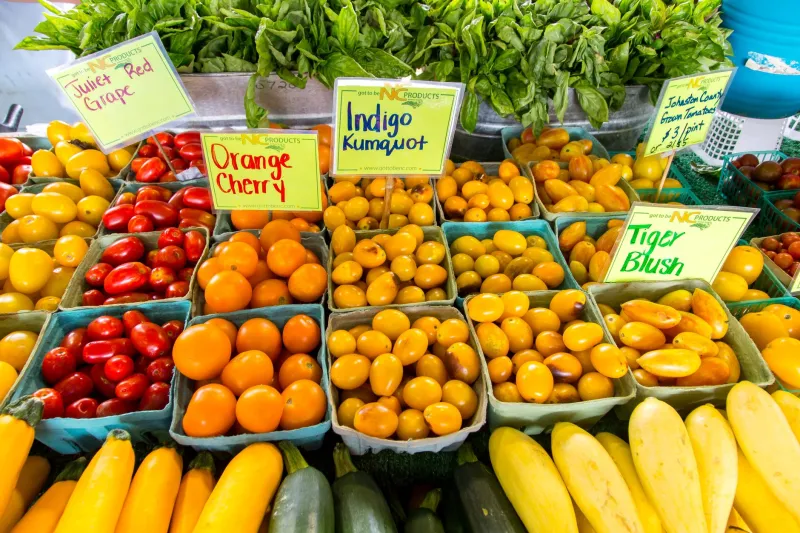
Start at a farmers market — but ask questions. This is the most obvious starting point, but not all farmers markets are created equal. Some vendors are legitimate growers. Others are "resellers" who buy wholesale and set up a booth. The tell? Ask them directly: "Did you grow this yourself?" A real farmer will have a specific answer — what field, what variety, what county. A reseller will get vague fast. You can also look for a state-issued "Certified Farmer" designation, which some states require at official markets.
Use LocalHarvest.org or the USDA's Local Food Directories. These tools let you search for farms, farmers markets, and CSAs (Community Supported Agriculture programs) by zip code. The USDA's Local Food Directories (ams.usda.gov) are free to use and updated regularly. This is genuinely one of the most underused resources for people trying to eat with more intention.
Join a CSA. A Community Supported Agriculture share is probably the most direct way to build a relationship with a local farm. You pay upfront for a season of produce, and each week you pick up (or receive) a box of whatever's actually growing right now. It forces you into seasonal eating — which is a feature, not a bug — and it puts you in direct contact with the people growing your food. Many CSAs include newsletters, farm visits, and the farmer's cell number. That's accountability you will never get from a grocery chain.
Look for state and regional food hubs. Across the US, food hubs have emerged as aggregators for small and mid-size farms — they collect produce from multiple local growers and distribute it regionally. Examples include Red Tomato in the Northeast, Appalachian Harvest in the Southeast, and Local Food Connection in the Midwest. These aren't household names, but they're doing serious work connecting regional farms to consumers and restaurants.
Talk to your restaurant. Farm-to-table is another term that gets abused, but many independent restaurants genuinely do source from nearby farms — and they'll tell you which ones if you ask. That's a warm introduction to a grower you might not have found otherwise.
Learn What's Actually in Season Where You Live
One of the fastest ways to spot a genuinely local product is to know your regional seasons. In the mid-Atlantic, tomatoes peak in August. In the Pacific Northwest, strawberries are a June thing. If you're seeing "locally grown" tomatoes at a Chicago grocery store in February, something isn't adding up.
Seasonal food guides exist for every US region — Epicurious, the Natural Resources Defense Council, and many state agricultural extension programs publish them for free. Spend ten minutes with one and you'll have a built-in BS detector for produce labels year-round.
Seasonal eating also just tastes better. A tomato grown in the right climate at the right time of year, picked at peak ripeness and sold within days, is a completely different experience from the pale, mealy thing that traveled across the country in a refrigerated container. Once you've had the real version, the imitation stops being satisfying.
The Relationship Is the Point
The deeper shift here isn't just about buying better tomatoes. It's about moving away from a model where food is an anonymous commodity and toward one where you actually know something about where your food came from.
That sounds idealistic, but it's surprisingly achievable. One farmers market visit, one CSA sign-up, one conversation with a farmer who can tell you exactly which field your garlic came from — these things change how you think about food. They also make you a much harder person to fool with a handwritten tag and a barn illustration.
The food system is built to keep you at arm's length from the people growing your food. Closing that distance, even a little, is one of the most genuinely radical things you can do as an eater.